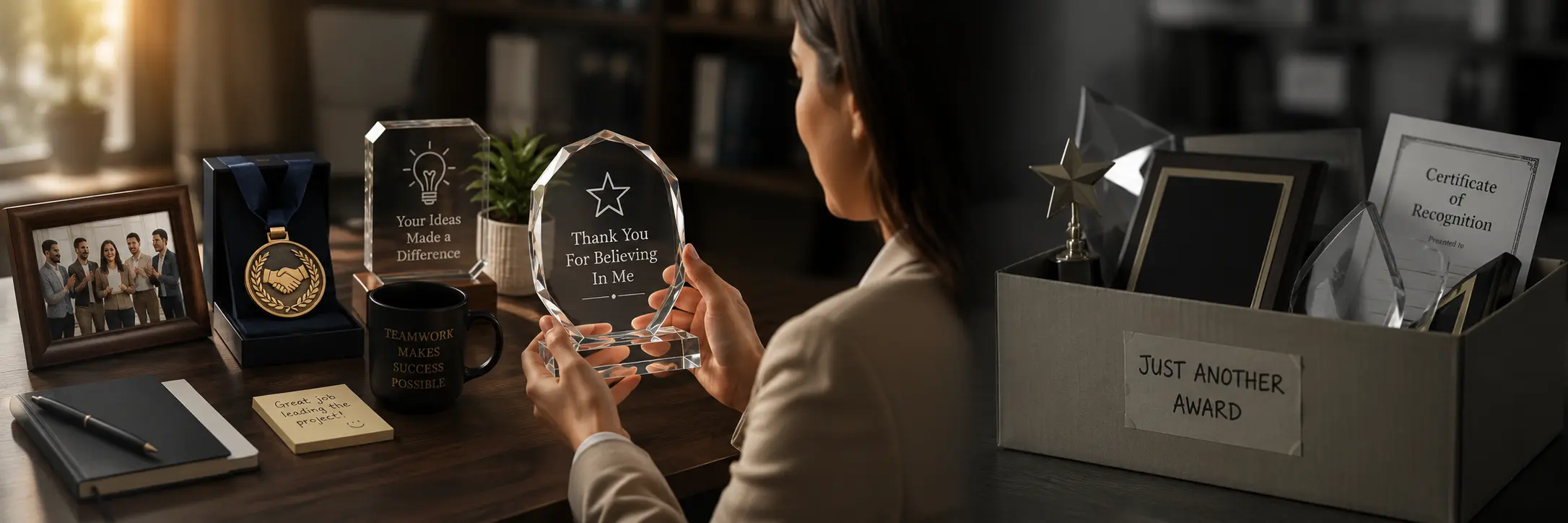
Walk through any office and you’ll notice something interesting. Some awards are displayed proudly for years. They sit on desks, line office shelves, and occupy prominent places in conference rooms and home workspaces. Their recipients remember exactly when they received them, who presented them, and why they mattered.
Others disappear almost immediately. They end up in drawers, storage boxes, or forgotten corners, rarely seen again after the ceremony ends. The question is simple:
Why do some employee recognition awards become lasting symbols of achievement while others are quickly forgotten? The answer has very little to do with the size of the award or even its cost. Instead, it comes down to something far more powerful: meaning.
The most memorable awards are not simply given. They are experienced. They tell a story, recognize a specific contribution, and create an emotional connection that lasts long after the applause fades. As organizations invest more heavily in employee engagement and workplace culture, understanding what makes recognition meaningful has become increasingly important.
Because recognition is not measured by how many awards are distributed. It is measured by how long they matter.
Recognition Is About More Than the Award Itself
Many organizations focus heavily on the presentation of recognition.
- The event.
- The speech.
- The announcement.
- The ceremony.
While these elements are important, they are only part of the experience. The award itself often becomes the lasting representation of that moment. Research from Gallup consistently shows that employees who feel genuinely recognized are more engaged, more productive, and more likely to remain with their organizations. However, recognition only creates lasting impact when employees believe it is sincere and meaningful.
This is where many recognition programs fall short. Employees do not remember awards because they received one. They remember awards because of what receiving it meant.
Generic Recognition Is Easy to Forget
One of the most common reasons awards lose significance is a lack of personalization. When recognition feels standardized or routine, employees may appreciate the gesture but struggle to form a lasting connection with it. Imagine receiving an award that looks identical to dozens of others and contains only your name and a generic message.
Now compare that to receiving an award that specifically references your achievement, contribution, leadership, or milestone. The difference is immediate. Personalized recognition demonstrates effort. It shows that the organization understands why the achievement matters and has taken the time to acknowledge it properly. People rarely remember generic appreciation. They remember being recognized for something unique.
The Story Behind the Award Matters
Every meaningful award tells a story. It captures a moment, achievement, challenge, or contribution that deserves recognition. This storytelling element is often what transforms a recognition piece into a lasting keepsake. For example, a leadership award is not simply about acknowledging a job title. It represents mentorship, decision-making, influence, and impact.
A service award is not just about years spent with an organization. It reflects loyalty, commitment, and growth over time. When employees can connect an award to a meaningful story, they are more likely to value and preserve it The award becomes a reminder of something important rather than simply another item on a shelf.
Personalization Creates Emotional Value
There is a reason custom engraved awards consistently outperform generic recognition pieces in terms of perceived value.
Personalization creates emotional ownership.
- A name.
- A date.
- A milestone.
- A meaningful message.
These details transform an award into something unique to the recipient. The emotional impact is significant because personalized recognition communicates intentionality. It tells employees that the award was created specifically for them rather than selected from a standard inventory.
This personal connection often becomes the difference between an award that is displayed proudly and one that is quickly forgotten.
Quality Influences Perception
Recognition communicates value. The quality of the award influences how that value is perceived. An employee who has spent years contributing to an organization’s success is unlikely to feel fully appreciated if the award appears inexpensive, generic, or temporary. Premium materials such as crystal, glass, metal, and fine wood elevate the recognition experience. They communicate respect for the achievement being celebrated.
More importantly, they create durability. Awards designed to last physically are often more likely to last emotionally as well. This is why many organizations choose custom engraved awards crafted from premium materials for leadership recognition, service milestones, retirement celebrations, and significant achievements. The quality reflects the significance of the accomplishment.
Timing and Context Matter
Even a beautifully designed award can lose impact if the recognition itself feels disconnected from the achievement. Meaningful recognition is timely.
Employees want acknowledgment when accomplishments are still relevant and memorable. Recognition also becomes more powerful when it is delivered in the right context.
A leadership award presented during an important organizational event often carries greater significance than the same award handed over casually without explanation. The surrounding experience contributes to the meaning attached to the award. People remember how recognition made them feel. The award becomes a physical reminder of that feeling.
Why Visible Recognition Has Long-Term Impact
One of the unique advantages of physical awards is visibility. Unlike digital badges, emails, or internal announcements, physical recognition remains visible long after the moment has passed.
Displayed in an office or workspace, an award continues reinforcing achievement every day. This visibility creates repeated moments of recognition.
- Employees see the award.
- Colleagues notice it.
- Visitors ask about it.
- Conversations happen.
The achievement remains part of the employee’s story. This ongoing reinforcement is one reason physical employee recognition awards continue to play an important role even in increasingly digital workplaces.
Recognition Shapes Workplace Culture
- Awards do more than celebrate individual accomplishments.
- They communicate organizational values.
- Every award tells employees what the company values most.
- When innovation is recognized, employees understand innovation matters.
- When leadership is celebrated, leadership becomes aspirational.
- When collaboration is rewarded, teamwork is reinforced.
The most effective workplace recognition programs use awards not only to honor achievement but also to strengthen culture. Employees are more likely to remember recognition when it feels connected to something larger than themselves.
The Future of Recognition Is Meaningful, Not More Frequent
Many organizations assume that improving recognition means increasing the number of awards they give. In reality, employees often value meaningful recognition more than frequent recognition.
The future of workplace recognition is not about quantity.
- It is about quality.
- It is about ensuring that every award reflects genuine appreciation, personal achievement, and organizational values.
- When recognition is thoughtful, employees remember it.
- When it feels routine, they often forget it.
- The difference lies in the experience being created.
Conclusion
The awards employees keep forever are rarely the most expensive. They are the most meaningful. They tell a story, acknowledge a specific contribution, and create an emotional connection between the recipient and the organization. Through personalization, quality craftsmanship, thoughtful presentation, and genuine appreciation, recognition becomes more than a moment. It becomes a memory.
As organizations continue investing in workplace culture and employee engagement, the goal should not simply be to give more awards. It should be to create recognition that employees will remember for years. Because the most effective employee recognition awards do not end when the ceremony concludes.They continue reminding people that their work mattered.
At Engraved Products, we create premium custom engraved awards designed to celebrate achievement with craftsmanship, personalization, and lasting significance. From leadership recognition and service milestones to employee appreciation awards and corporate recognition programs, meaningful recognition starts with creating awards people will proudly keep for a lifetime.
Frequently Asked Questions
Employee recognition is the process of acknowledging and rewarding employees for their contributions, achievements, and commitment to organizational success. Effective employee recognition programs help improve engagement, boost morale, increase productivity, and strengthen employee retention by making team members feel valued and appreciated.
Employee recognition awards reinforce positive behaviors and highlight the values an organization wants to promote. When employees see excellence, leadership, innovation, and teamwork being celebrated, it helps create a stronger workplace culture and encourages others to contribute at a higher level.
Employee appreciation awards help build emotional connections between employees and their organization. Studies consistently show that employees who receive meaningful recognition are more likely to remain engaged, satisfied, and loyal, reducing turnover and improving long-term retention.
Recognizing the same employees can be appropriate when their performance consistently merits recognition. However, successful employee recognition programs should also identify and celebrate contributions across different teams and roles to ensure recognition remains fair, inclusive, and motivating for the entire workforce.
The most effective employee recognition awards are personalized, specific, and tied to a meaningful achievement or milestone. Custom engraved awards, personalized messages, and clear acknowledgment of an employee’s contribution create lasting value and make recognition more memorable and impactful.